GPS, wearables, Optojump, force plates: your staff measures everything. The gap is the step after the numbers. Someone still has to turn them into the next rep, by hand, for every athlete. STPO closes that gap: tailored time and space cues apply each planned level precisely, and the athlete self-corrects into flow. No new hardware.
Just like you plan strength with weights: game-speed progressive overload, at your fingertips.
Strength built in the gym, delivered inside the skill: accelerate, brake, change direction, on the ball. Technical, physical and mental skills trained in the same rep, 3-in-1. Game speed rises in minutes, not months.
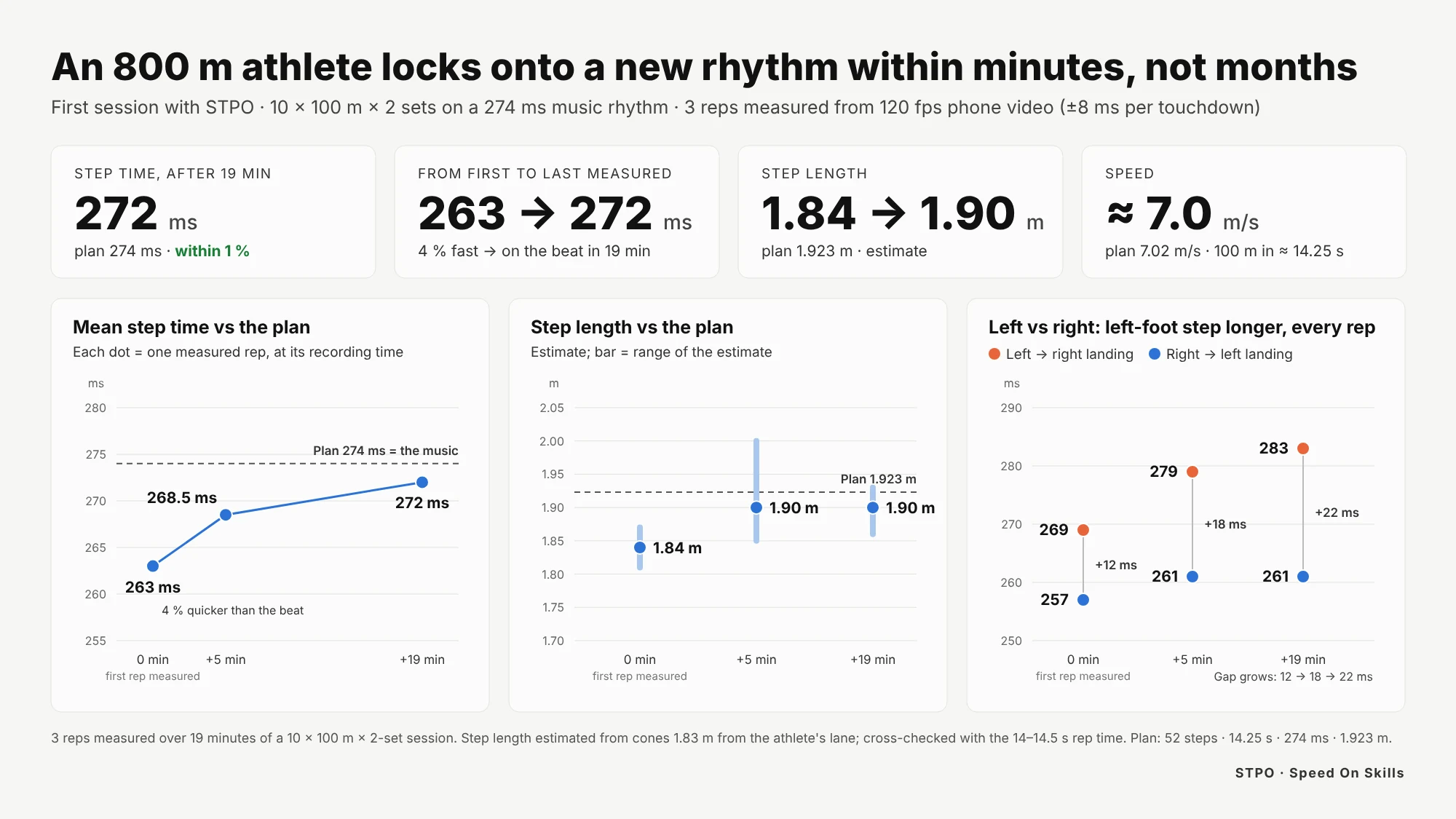
A national-level 800 m runner, first session: from 4 % off the planned rhythm to within 1 % in 19 minutes. And a finding no stopwatch gives: a left–right gap that grows with fatigue, 12 → 18 → 22 ms.
We decode one of your clips and build the next reps, free, as the start of a joint project.
No paper yet tests prescribing the next rep from measured steps. It is a study STPO can lead, with your lab, your federation or your brand.
A plan for your teams, set up with your staff and run on your tools.
In the 1960s, Yury Verkhoshansky's shock method, the depth jumps that became plyometrics, looked strange. More than fifty years later it is in every strength and conditioning program, and still studied in 2026. In 1997 the same man wrote about STPO's roots: "a very good idea". Thirty years on, the tech has caught up: in 2026 a phone measures what the method has always done.
Meet the author: carlobressan.com →